
Detroit Almost Had a World-Class Subway System
Detroit is a city that loves big ideas. However, when it comes to public transit, those big ideas have a painful history. Time and again, Detroit came close to building something truly remarkable. In fact, the city proposed major subway and rail systems multiple times over the past century. Each time, the dream slipped away. As a result, Detroit became one of the largest American cities never to build a real rapid transit network.
This is not a story of failure alone. It is a story of ambition, politics, and missed chances. Furthermore, it is a story that every proud Detroiter deserves to know. Understanding what could have been helps us appreciate what the city still strives toward today. So let’s take a ride through Detroit’s lost transit history.
The 1920s: Detroit’s First Subway Dreams
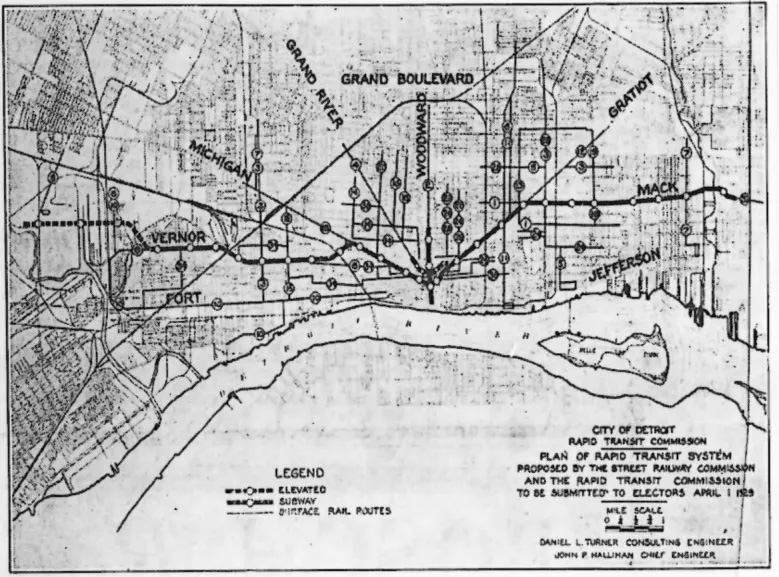
By the 1920s, Detroit was booming. Detroit had become the center of the American automobile industry. Meanwhile, its streets were growing dangerously congested. The city’s electric streetcar network, run by the Detroit Street Railways, struggled to keep up. City planners looked at New York and Chicago and saw the answer: a subway.
In 1924, Detroit voters approved a bold transit plan. The proposal called for a network of underground rapid transit lines. These lines would connect downtown Detroit with neighborhoods across the city. Woodward Avenue was a top priority for a subway corridor. Additionally, planners eyed Michigan Avenue and Gratiot Avenue as key routes. The system would have rivaled anything in North America at the time.
However, the plan quickly ran into trouble. Cost estimates ballooned almost immediately. Political fights broke out over routes and funding. Furthermore, the powerful automobile industry had little interest in promoting public transit. Detroit was the city that built cars, after all. By the late 1920s, the subway plan had quietly died. The Great Depression then finished off any remaining momentum. Detroit would not seriously revisit rapid transit for decades.
The Streetcar Decline and the Rise of the Bus
While subway dreams faded, Detroit’s streetcar network also began to shrink. The broader national shift away from streetcars hit Detroit hard. By the 1950s, the city had completely abandoned its once-extensive streetcar system. Buses replaced the beloved electric cars on nearly every route. In contrast to cities like San Francisco and Boston, Detroit made no effort to preserve rail transit.
This shift had lasting consequences. Detroit’s working class depended heavily on public transit. Factory workers needed reliable connections to plants in Hamtramck, River Rouge, and across the metro area. However, buses offered slower and less reliable service. Meanwhile, highway construction accelerated. The Lodge Freeway and the Chrysler Freeway carved through neighborhoods. The car became king, and transit fell further behind.
Notably, this era cemented a car-dependent culture that would define Detroit for generations. However, it also left hundreds of thousands of residents without good options. Not everyone could afford a car. Therefore, the lack of real rapid transit became a deep equity issue. That issue still shapes the city today.
The 1970s: Detroit’s “BART of the Midwest” Vision
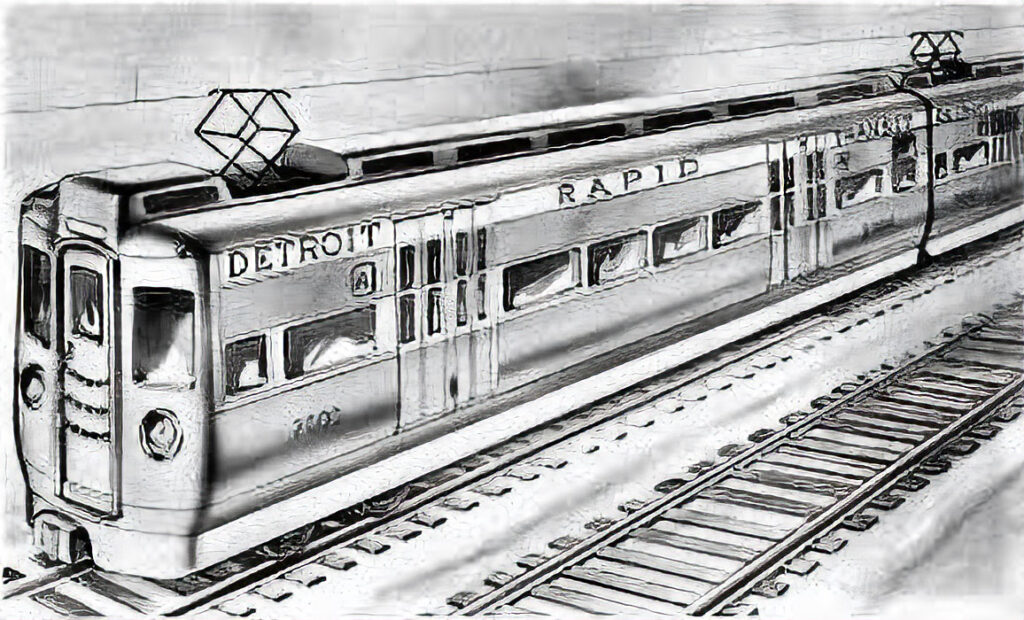
In the early 1970s, Detroit dared to dream big again. Federal transit funding was flowing generously after the Urban Mass Transportation Act opened new possibilities. Cities across the country were building modern rail systems. San Francisco opened BART in 1972. Washington D.C. was building Metro. Detroit wanted its own version of that same bold vision.
The Southeast Michigan Council of Governments developed an ambitious regional rapid transit plan. Locals and transit advocates called it the “BART of the Midwest.” The proposal outlined a network of heavy rail lines stretching across Metro Detroit. Lines would radiate outward from downtown along Woodward, Michigan Avenue, and Gratiot. Furthermore, the system would serve suburbs including Pontiac, Dearborn, and the Grosse Pointes. It was genuinely transformative in scope.
Federal officials were enthusiastic. The U.S. Department of Transportation signaled strong support. Detroit seemed poised to finally join the ranks of great transit cities. However, the plan required regional cooperation and local funding matches. Those two things proved impossible to secure together. Suburban communities resisted connecting to Detroit. They feared the rail lines would bring unwanted change to their neighborhoods. As a result, regional support collapsed. The “BART of the Midwest” never broke ground.
The People Mover: A Grand Vision Reduced to a Loop
![Detroit People Mover [Photo courtesy Richard Hedrick on Unsplash. License: CC0]](https://metroposters.com/wp-content/uploads/2026/06/detroit-people-mover-1024x684.jpg)
Out of the wreckage of the 1970s plan came a compromise. Detroit would build a downtown people mover instead of a regional rail system. The Detroit People Mover opened in 1987. It runs on an elevated loop through downtown, covering just 2.9 miles. Thirteen stations connect hotels, casinos, and office buildings in the core.
In contrast to the regional network once imagined, the People Mover is a modest system. Critics quickly called it a “people fewer mover” due to low ridership. It was designed as one piece of a larger transit puzzle. However, that larger puzzle never came together. The People Mover ended up serving mostly tourists and downtown workers. It never became the backbone of a real citywide network.
Additionally, the People Mover carried a heavy symbolic weight. It represented what Detroit got instead of what it deserved. Nevertheless, the system still operates today. Furthermore, it has become a quirky piece of Detroit’s identity. Locals ride it during Tigers games and Lions playoff runs. It connects to the QLine and offers a bird’s-eye view of downtown’s revival.
The Light Rail Saga on Woodward Avenue
![Detroit QLine tram on Adelaide Street [Photo courtesy 42-BRT on Wikimedia. License: CC BY-SA 4.0]](https://metroposters.com/wp-content/uploads/2026/06/detroit-q-line-adelaide-street-2025.jpg)
Detroit’s transit struggles continued into the 21st century. For decades, planners and advocates pushed for light rail on Woodward Avenue. This historic corridor runs from downtown through Midtown, New Center, and all the way to Pontiac. It is Detroit’s most iconic street. Therefore, it seemed like the natural spine for a modern transit line.
In 2008, a serious light rail proposal gained real momentum. Federal funding was committed. Construction seemed imminent. However, political disagreements once again derailed the full vision. The regional rail plan shrunk down to a streetcar line. As a result, the QLine opened in 2017, covering just 3.3 miles of Woodward from downtown to New Center. A line once planned to reach Pontiac became a short urban streetcar.
The QLine has faced real criticism. Many transit advocates argue it does not move people efficiently enough. However, it has also spurred development along Woodward. Midtown and New Center have seen significant investment since the line opened. Therefore, the QLine tells a complicated story. It is a compromise, not a solution. Detroit still lacks the regional rapid transit network it has needed for a century.
Regional Transit Authority: Still Trying to Get It Right
Michigan created the Regional Transit Authority of Southeast Michigan in 2012. This was a major step forward. The RTA coordinates transit planning across Detroit, Wayne, Oakland, Macomb, and Washtenaw counties. It represents the kind of regional cooperation that eluded Detroit in the 1970s.
However, progress remains slow. A regional transit millage went before voters in 2016. It failed narrowly, losing by less than one percent. A second attempt in 2020 did not make the ballot. Therefore, the dream of a true regional rapid transit network remains just that: a dream. Detroit keeps reaching for it. The city refuses to give up on connecting its neighborhoods and suburbs by rail.
Notably, many cities that once seemed far behind Detroit have since built impressive transit networks. Minneapolis, Houston, and Salt Lake City all opened light rail systems in recent decades. In contrast, Detroit still relies primarily on buses. However, there is still hope. Advocates, planners, and a new generation of Detroiters continue to push for better transit. The conversation is very much alive.
Celebrate Detroit’s Transit Ambition With a Fantasy Subway Poster
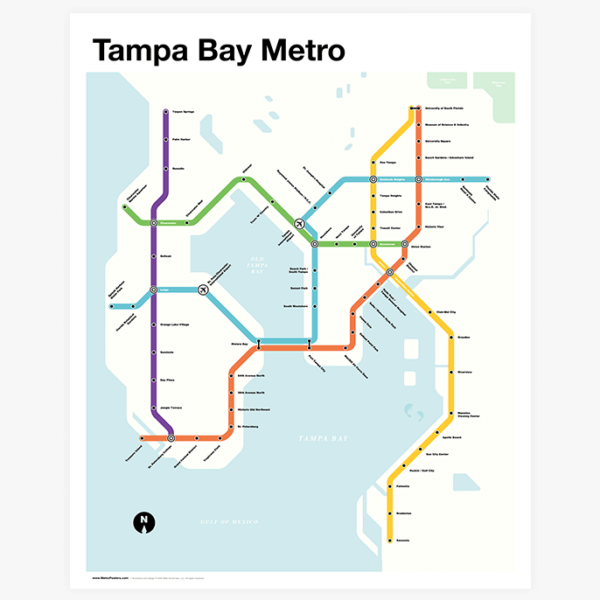
Detroit has always dreamed bigger than its circumstances allowed. From the bold 1920s subway blueprints to the BART-inspired regional rail vision of the 1970s, this city has never stopped imagining a better way to move. That spirit of ambition is worth celebrating. Furthermore, the “what could have been” is just as much a part of Detroit’s story as what was actually built. If you love Detroit’s history and its restless drive to be something great, bring that energy into your home or office. The Detroit Metro Map from MetroPosters.com reimagines Detroit with the world-class subway system it always deserved. It is a bold, beautiful piece of art that honors the city’s ambitions and its identity. Give Detroit the transit map it never got. Grab your Detroit Subway Map today and put a little Motor City pride on your wall.
Cover Photo by Nadine E on Unsplash


0 Comments